How to include handwritten notes in your photobook
Add a personal touch to your photobook by incorporating handwritten notes and letters.
By the Studio6 min read
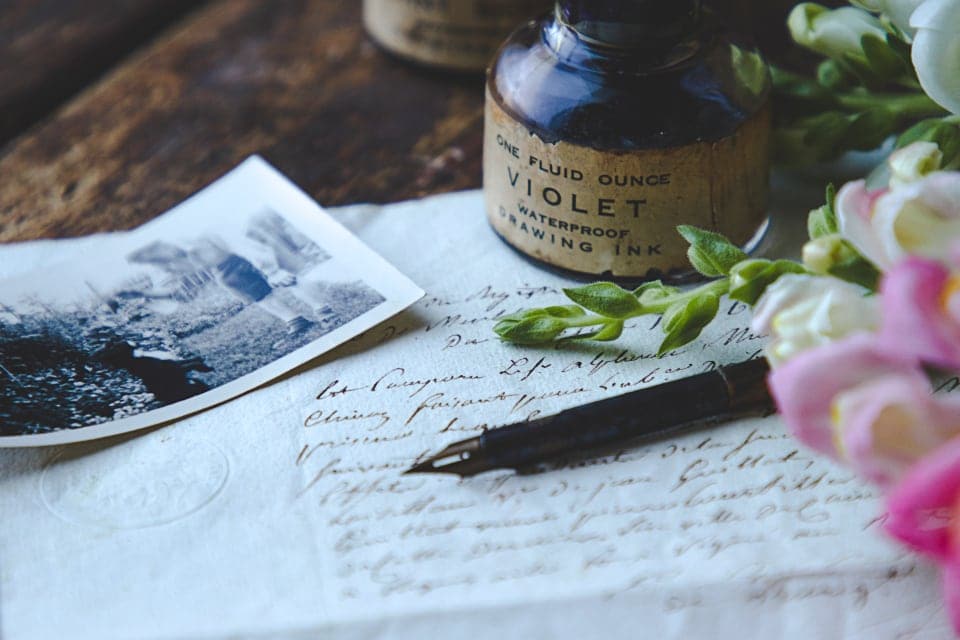
Handwriting carries a person in a way that type never can. The slope of a grandmother's letters, a father's cramped capitals, a child's first attempt at their own name: these are as recognisable as a face. Adding handwriting to a photobook is one of the simplest ways to make it unmistakably yours.
What handwritten items can I include?
Almost anything with writing on it:
- Old letters and postcards.
- Birthday and wedding cards.
- Notes left on the fridge.
- Recipe cards.
- Pages from diaries and travel journals.
- A child's drawings with their name scrawled in the corner.
- Messages from guests at a wedding or a party.
How do I scan handwriting for printing?
A flatbed scanner gives the best results, but a phone works well if you are careful. Place the paper on a plain, flat surface near a window with soft, even daylight. Hold the phone directly above the page so the edges are straight, and avoid shadows from your hand or the phone itself. Many phones have a document scanning mode that straightens the page automatically. Save the result at the highest quality available.
Should I clean up old handwriting?
Gently. Adjust brightness and contrast so the writing is legible, and straighten the page. Leave the paper colour, folds, stains and small tears as they are. Those marks are part of the history. A note that looks perfectly clean can feel strangely empty.
Where should handwriting go in the layout?
Treat handwritten items like photos. A short note can sit beside the photo it describes, almost like a caption written by the person in the picture. A full letter deserves its own page, with a small photo of the writer nearby. Wedding guest messages work beautifully as a collage across one spread, with the couple's photo in the middle.
Can I write directly in the finished book?
Yes, and it is one of the loveliest things you can do. Leave a few blank or quiet pages at the start or end of the book, and choose a matte or uncoated paper that takes ink well. Give the book to someone with a pen and ask them to write a message before you wrap it. Use a pen with pigment ink so it does not smudge or fade.
How do I combine handwriting with typed text?
Let handwriting be the special element and keep typed text simple. Use a calm, readable typeface for captions and titles, and do not try to imitate handwriting with a script font. The contrast between the real handwriting and clean type makes the handwriting stand out more.
Ask people to write for the book
You do not have to rely only on old notes. Ask family members to write a few lines about a photo or a memory, on paper, and send you a photo or scan. Ask a grandparent to write the names of the people in an old group photo. Those small notes become priceless as years pass and memories fade.
A small note on care
Handle original letters gently, keep them flat, and return them to their owners after scanning. The book holds a copy of the memory; the original paper deserves to stay safe too.